Wavelength Game Basics – Rules and Complete Overview
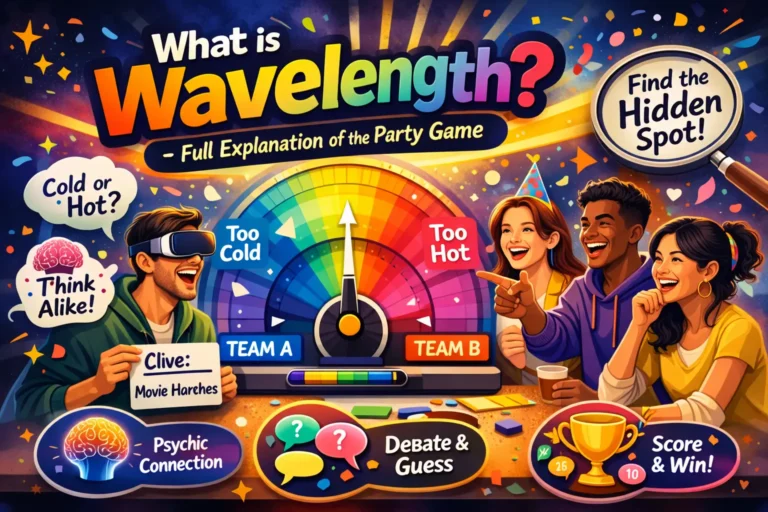
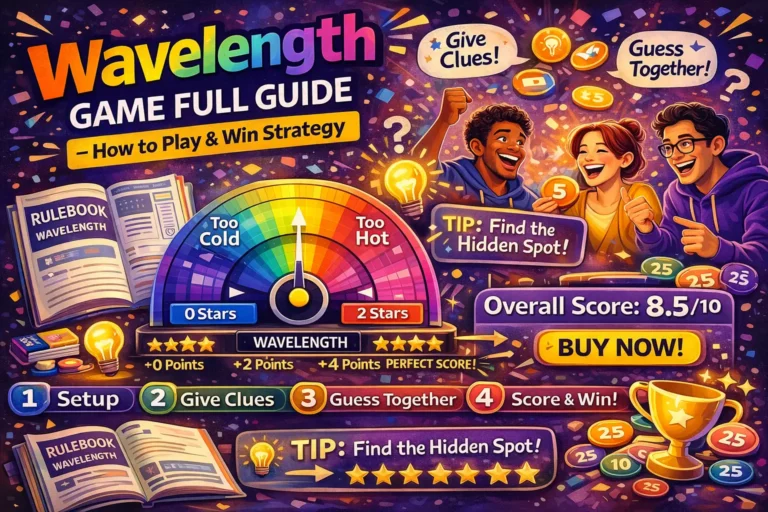
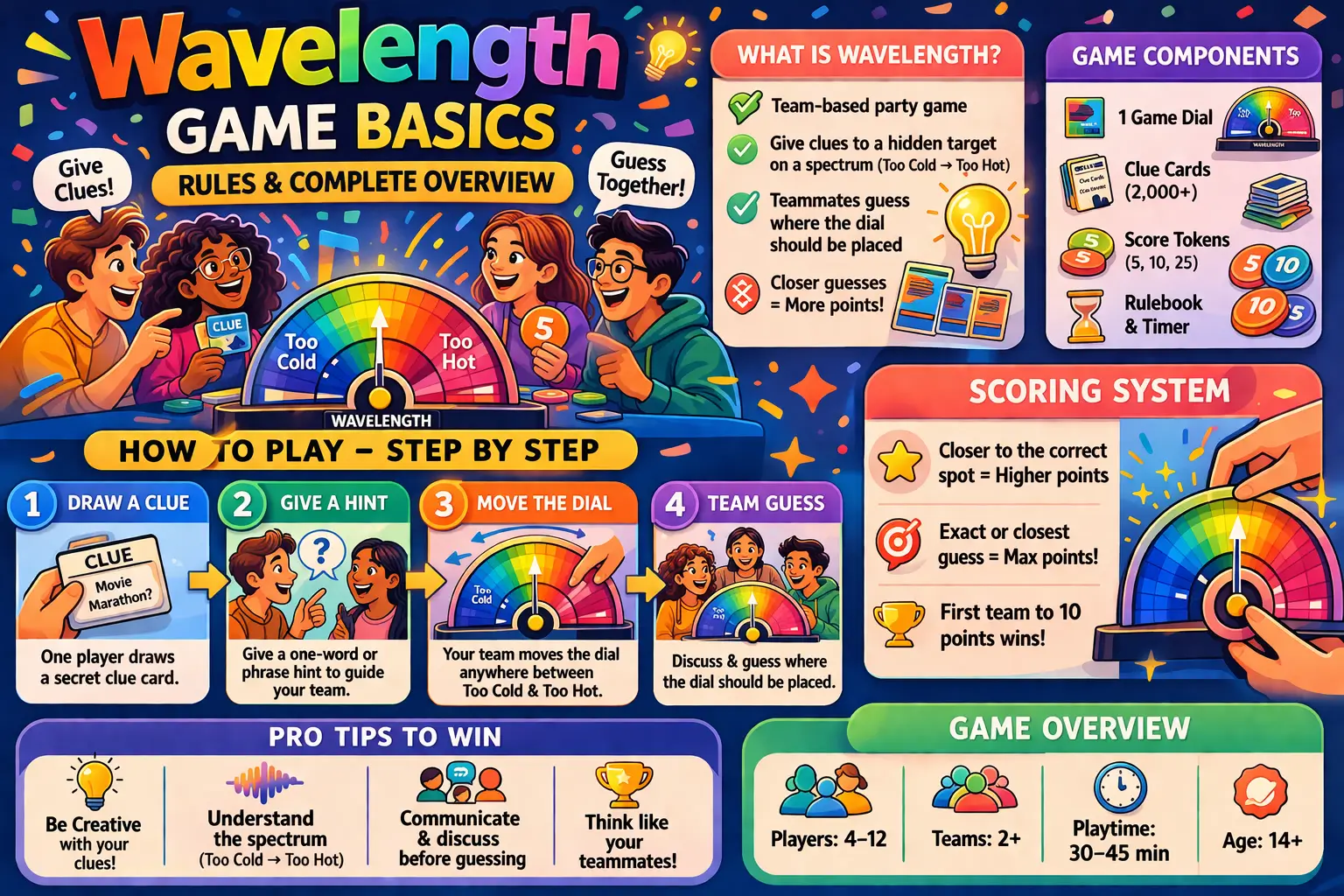
Wavelength Game is an engaging social party game that blends communication, intuition, and strategy. Players take turns giving clues to help their teammates locate a hidden target along a spectrum. Its unique mechanics and interactive nature make it perfect for parties, family game nights, or casual gatherings. This guide provides a complete overview of Wavelength’s basics, including rules, setup, gameplay, and tips for beginners.
Getting Started with Wavelength
Understanding the Components
The game includes a spectrum dial, clue cards, scoring markers, and team indicators. Each component is designed to ensure clarity and interactive gameplay. The spectrum board hides the target, requiring players to interpret clues carefully. Understanding every component helps beginners feel confident and ensures rounds run smoothly from the very first play.
Setting Up Teams
Players are divided into two teams to create fair competition. Teams sit opposite each other for easy communication and visibility of the spectrum. Scoring markers are placed nearby to track points during rounds. Proper team setup provides structure, encourages active participation, and ensures all players are engaged throughout the session.
Assigning Roles
Each round requires a clue giver who knows the hidden target, while the rest of the team guesses its placement. Roles rotate after each round, so all players get a chance to contribute actively. Clear role assignment ensures fairness and keeps gameplay dynamic. Rotating roles allows everyone to experience both giving and interpreting clues.
Choosing Difficulty Levels
Wavelength offers adjustable difficulty levels to suit all player skill levels. Beginner levels use simple, literal spectra, while advanced levels feature abstract or humorous prompts. Difficulty affects guessing accuracy, scoring potential, and strategic planning. Choosing the correct level keeps gameplay challenging while remaining fun and engaging.
Preparing for the First Round
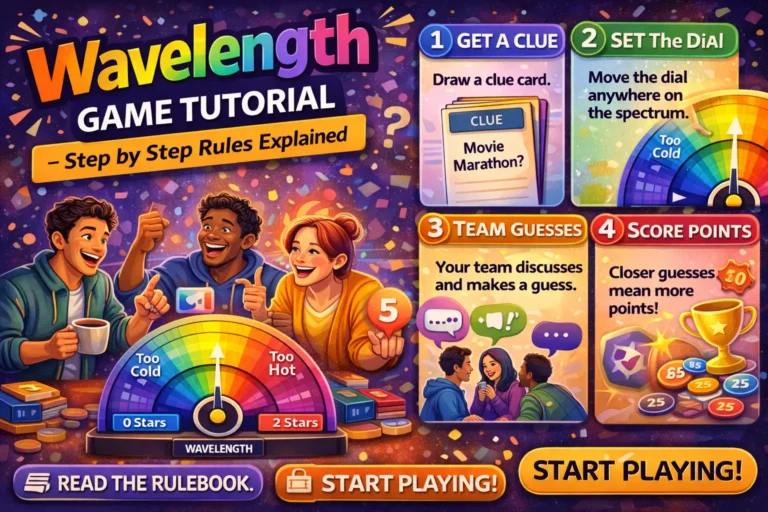
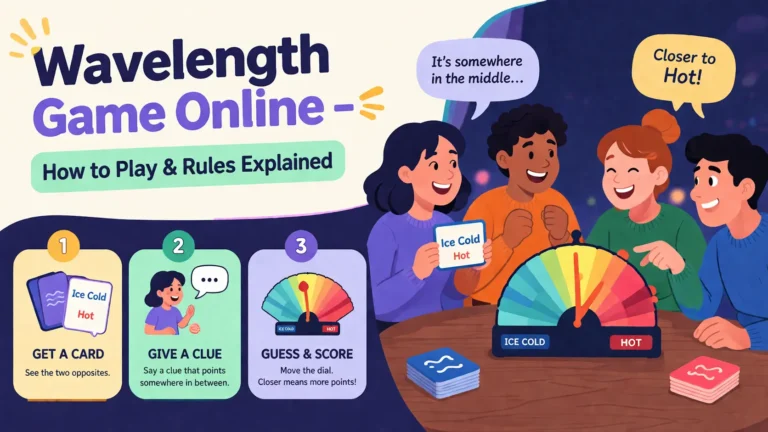
The clue giver draws a card and secretly views the target location. They then provide a clue to guide teammates toward the correct position without revealing the exact answer. Team members discuss and place the pointer along the spectrum. Points are awarded based on accuracy, and the next round begins with roles rotating. Proper preparation sets the tone for consistent performance.
Understanding the Objective
The Hidden Spectrum
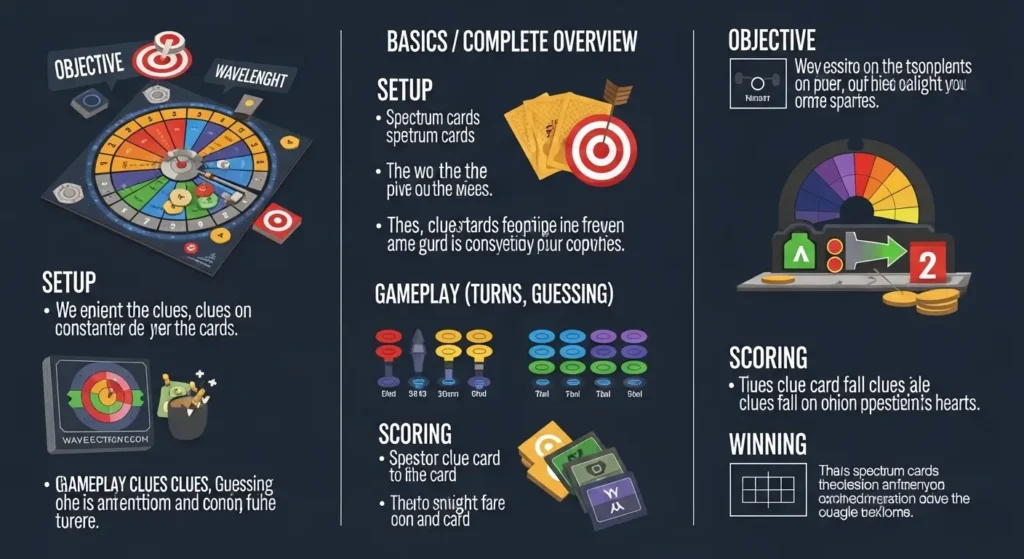
The main objective is to guess the hidden target on the spectrum accurately. Spectra range from literal contrasts like “Hot-Cold” to abstract ideas like “Simple-Complex.” Correct interpretation of clues is essential to maximize points. Accurate pointer placement determines both round and cumulative team success, encouraging teamwork and careful thinking.
Role of the Clue Giver
The clue giver provides hints that balance clarity with subtlety. Clues that are too obvious reduce the challenge, while vague hints can confuse teammates. Rotating this role ensures that all players participate actively. Effective clue-giving is crucial as it often determines the round’s outcome and points earned.
Making Team Guesses
Teams collaborate to place the pointer based on the clue provided. Open discussion improves accuracy, while overcomplicating ideas may reduce effectiveness. Placement closer to the target earns higher points. Strategic discussion and consensus enhance performance and consistency in scoring across rounds.
Scoring Points
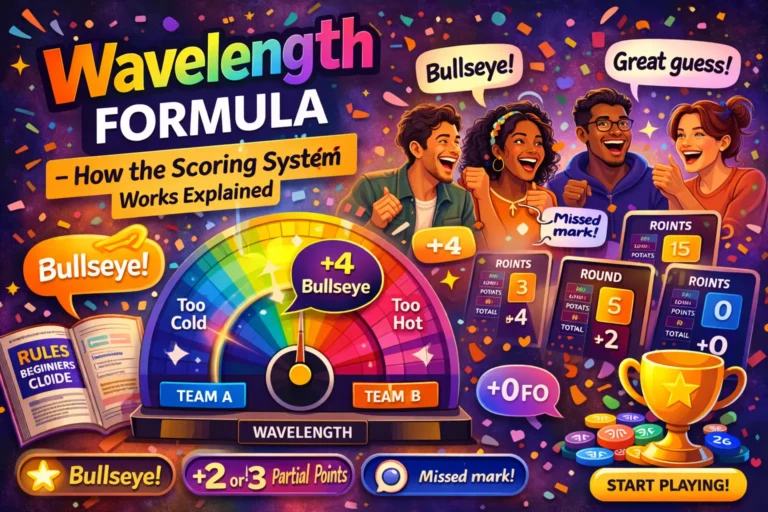
Points are awarded according to the pointer’s proximity to the hidden target. Exact placement earns maximum points, while near misses earn partial points. Scores can be tracked manually or digitally for accuracy. Understanding the scoring mechanics helps teams plan clues and guesses strategically to maximize total points.
Winning the Game
The team with the highest cumulative points after all rounds wins. Ties can be resolved using sudden-death rounds or bonus challenges. Success depends on teamwork, communication, and effective clue-giving. Regular practice improves intuition, collaboration, and overall performance, increasing the likelihood of winning.
Step-by-Step Gameplay
Starting a Round
A round begins with the clue giver drawing a card and secretly observing the target. They provide a clue that guides teammates without revealing the exact position. Teammates discuss and place the pointer along the spectrum based on the hint. Proper planning and teamwork maximize points in each round.
Giving Clues
Clues should be clear, concise, and creatively guide teammates toward the hidden target. The clue giver should consider multiple interpretations of the spectrum to avoid confusion. Timing, phrasing, and clarity are essential for effective clue-giving. Well-constructed clues increase the chances of accurate guesses and higher scoring.
Guessing Process
After hearing the clue, teammates deliberate before placing the pointer. Collaboration ensures more precise placement, while overthinking may reduce accuracy. The closer the pointer is to the hidden target, the higher the score. Consensus and strategic discussion enhance team performance and point accumulation.
Confirming the Target
Once the pointer is placed, the clue giver reveals the actual target location. Points are awarded based on proximity to the hidden target. This validates teamwork and clue interpretation. Immediate feedback allows teams to refine strategies for future rounds.
Moving to the Next Round
Roles rotate, so a new player becomes the clue giver. Teams continue alternating turns until all rounds are completed. Cumulative scoring tracks overall performance. Role rotation ensures fairness and keeps all participants engaged throughout the game.
Expert Tips
Clear Communication
Clues should be concise, clear, and interpretable without giving away the target. Open discussion allows all players to contribute ideas and collaborate effectively. Overcomplicating hints reduces points and slows gameplay. Clear communication consistently improves performance and enjoyment.
Regular Practice
Frequent gameplay strengthens intuition for spectrum placement and clue interpretation. Teams learn patterns and refine both clue-giving and guessing strategies. Regular practice builds confidence, reduces mistakes, and improves point accumulation. Consistent practice ensures better results over multiple rounds.
Observation Skills
Observing other teams provides insights into strategies and common mistakes. Teams can anticipate challenging rounds and adjust tactics accordingly. Learning from others improves decision-making and strategic planning. Strong observation skills increase adaptability and overall performance.
Strategic Clues
Clues should subtly guide teammates toward the hidden target without revealing it. Considering multiple interpretations increases guessing accuracy. Timing and careful phrasing maximize points per round. Strategic clue-giving can significantly impact overall performance and scoring.
Patience and Engagement
Rushing guesses reduces accuracy and points. Active engagement ensures all team members contribute meaningfully. Calm, thoughtful discussion improves focus, teamwork, and morale. Patience enhances accuracy, collaboration, and the overall enjoyment of gameplay.
Common Mistakes
Overcomplicating Clues
Complex or abstract clues confuse teammates and reduce scoring potential. Simple, clear hints improve interpretation and accuracy. Overcomplicated clues slow gameplay and frustrate participants. Balanced clue-giving ensures fair competition, engagement, and enjoyable rounds.
Poor Communication
Ignoring teammate input reduces guessing accuracy. Encouraging participation strengthens collaboration and improves outcomes. Communication is essential for success in Wavelength. Clear dialogue ensures correct interpretation and consistent scoring.
Misreading Spectrums
Incorrectly interpreting spectrum extremes reduces points earned. Teams should clarify the ends and discuss interpretations before guessing. Visual cues help align guesses accurately. Proper spectrum understanding maximizes scoring potential for each round.
Rushing Decisions
Quick, unplanned guesses often miss the target. Thoughtful discussion allows more precise pointer placement. Patience improves results and maintains team morale. Calm decisions increase accuracy and overall enjoyment of the game.
Ignoring Score Strategy
Focusing solely on one round reduces cumulative points. Teams should plan clues and guesses, considering total scoring. Awareness of the scoring system allows for better strategic decisions. Integrating score strategy improves long-term performance and results.
Variations and Modes
Custom Spectrums
Players can create unique spectrums for new challenges. Customization increases replayability and encourages adaptive strategies. Teams must adjust to succeed in different scenarios. Custom spectra keep gameplay fresh and engaging over multiple sessions.
Party Mode
Party mode supports larger groups with rotating roles to involve everyone. Timed rounds maintain energy and engagement. Active participation enhances teamwork and social interaction. Party mode is perfect for gatherings or online sessions.
Solo Practice
Solo practice allows individual players to refine their clue-giving and guessing skills. Players can experiment without affecting team scores. Tracking progress builds confidence and improves performance for multiplayer sessions. Solo practice enhances strategic thinking and accuracy.
Themed Challenges
Themed rounds focus on categories such as movies, music, or history. Clues and spectra match the theme for added challenge and variety. Teams adjust strategies to succeed in themed rounds. This keeps repeated gameplay fresh and engaging.
Tournament Mode
Tournaments involve structured play among multiple teams. Matches follow scoring or elimination rules to determine winners. Strategy, teamwork, and communication are tested under competitive conditions. Tournament mode adds excitement, challenge, and replay value.
FAQs
What is Wavelength?
It’s a party game where teams guess hidden positions along a spectrum using clues.
How many players can play?
The game works best with 4 to 12 players for maximum engagement.
Do I need prior experience?
No, beginners can learn the rules quickly and start playing immediately.
Can Wavelength be played online?
Yes, digital versions allow multiplayer play with friends and family.
How is scoring determined?
Points are awarded based on how close guesses are to the hidden target.
Conclusion
Wavelength combines communication, teamwork, and strategy into a fun and engaging game. Understanding the rules and gameplay ensures smooth, fair play for all participants. Using clear clues, collaboration, and strategic thinking improves performance. This guide equips players to enjoy Wavelength fully and maximize points effectively.